See the pattern.
Change the day.
Striova turns everyday observations — food, sleep, behaviour, school — into clear patterns and appointment-ready evidence. For families raising a neurodivergent child — or still waiting to find out — whether that's ADHD, autism or both. Information, never a diagnosis.


on Android
Free forever on Core · Striova Pro £12.99/mo or £129/yr (up to 4 children), with a 2-week free trial you can start any time · cancel anytime · Aligned with NHS, FSA & NICE guidance · UK GDPR & ICO Children's Code by design.
Named for the striatum — the part of your child's brain that processes dopamine, reward and motivation, and one of the structures most consistently affected in ADHD.
See it in action
Home, school and clinic — one record
One child's record moving through the parent's app, the school's portal and the clinic — in under two minutes.
How it works
Observe · See the pattern · Prepare
Everyday observation becomes structured evidence — so the wait becomes useful, and the appointment goes further.
- 1
Observe
A few seconds a day at home, a 2-minute note from the teacher. No clinical training needed.
- 2
See the pattern
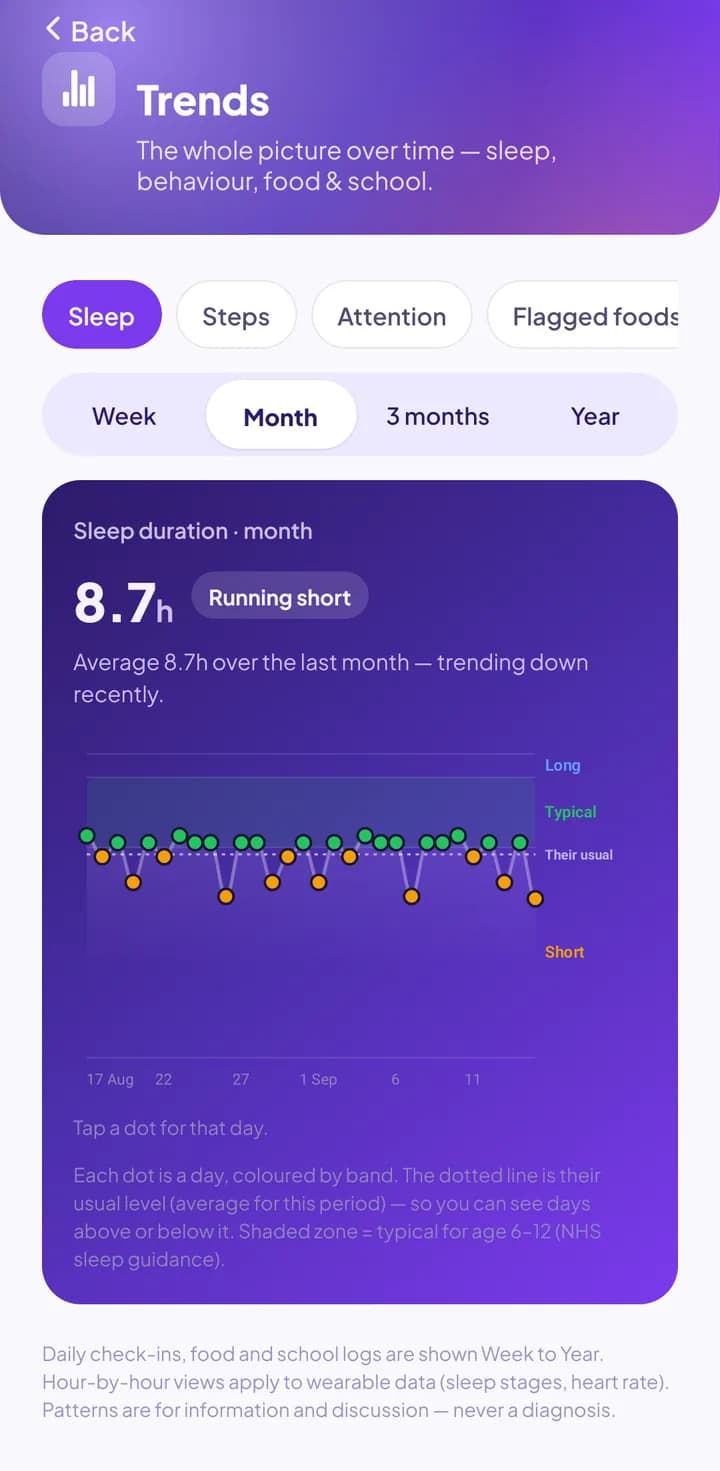
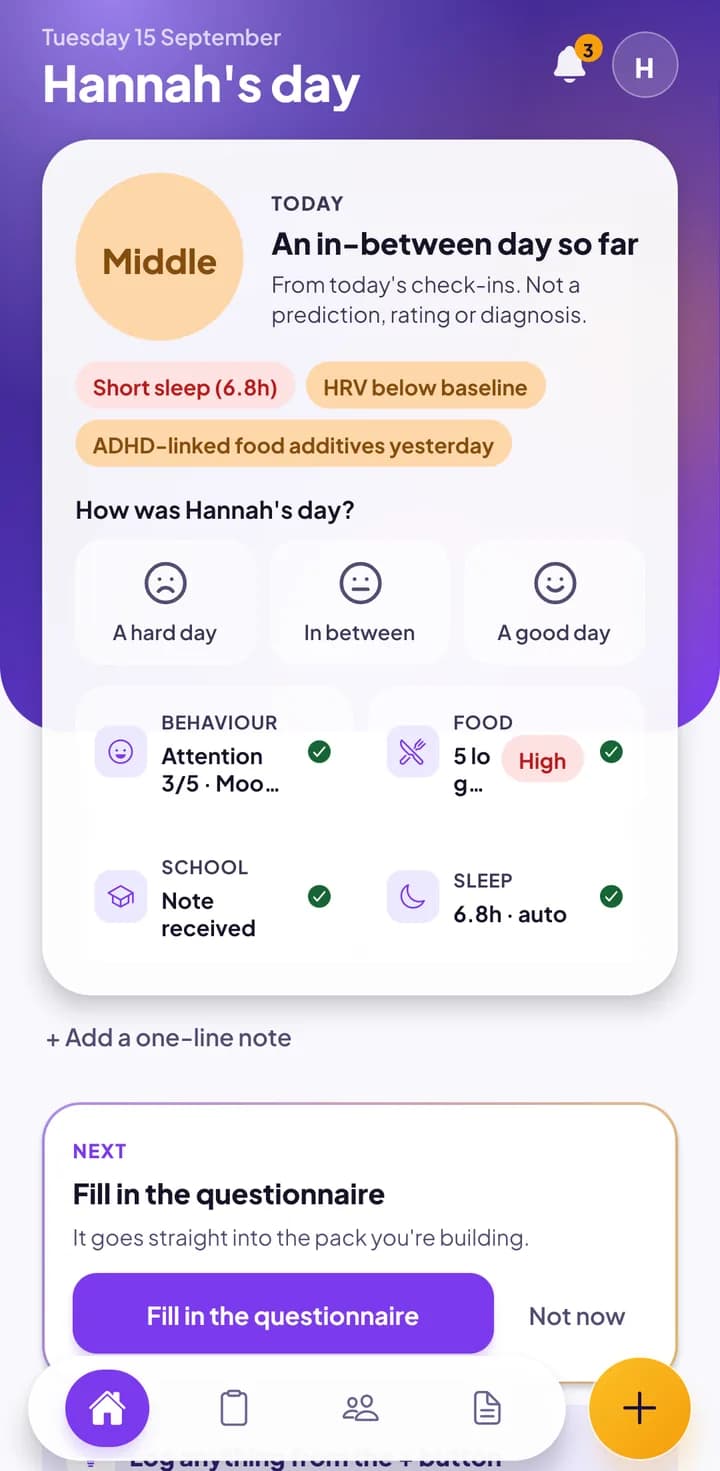
Striova turns it into a plain-English picture across sleep, food, focus and school.
- 3
Prepare for support
Walk into your GP or assessment with the evidence already organised — and act while you wait.
What makes Striova different
Not another symptom checklist or one-off test. The observation layer underneath the whole journey — subjective and objective, home and school.
Home and school, seen together
How the day really goes
Felt and measured
Walk in prepared
…and the practical everyday tools that go with it — food and label scanning, wearables, needs-led strategies, referral and school letters, and a UK support directory. See how it helps families →
Built for where SEND & ADHD support is heading
Support that starts before a diagnosis — not after
National reviews keep pointing the same way: needs-led support families can use while they wait, a clearer picture of how things affect daily life, and home and school working from the same information. The government's SEND reform consultation puts it plainly — identifying needs early “and not waiting for a formal diagnosis”, with families supported “without needing to wait for a diagnosis or an EHCP”. Striova is built around exactly that.
Quotes: SEND Reform: Putting Children and Young People First (CP 1509, Feb 2026), a government consultation — proposals, not law. We describe the direction of national policy; we don't imply endorsement.
Help while you wait
Daily-life impact, made visible
A clear route forward
Home and school, together
Nothing lost when they move
Striova provides information and support, not diagnosis or treatment. References to national policy describe the direction of national ADHD and SEND policy and do not imply endorsement.
Looking for an assessment?
Search ADHD and autism assessment providers by postcode — including free NHS Right to Choose options that accept referrals from anywhere in England, with the age range each one actually covers. No account needed.
One record. Every part of the journey.
Striova connects the people around a child — parents, teachers and clinicians — around one structured, non-diagnostic record.
Parents & carers
Keep the record while you wait, with a second carer if you have one — and choose item by item who sees what.
How it helps families
Schools & SENCOs
Keep your SEN register, your graduated-approach cycles and your costed provision in one place — for every pupil, whether or not their family uses Striova.
For schools & SENCOs
Private assessment clinics
Patients arrive with months of structured observations — and you can share your assessment findings back to the family in a tap.
For clinicians
Help us get the right support to every child.
ADHD and autism assessment waits in the UK can stretch for years. We're partnering with schools, SENCOs, private clinics and NHS services to turn that wait into structured, useful evidence — and to reach families who need it most.